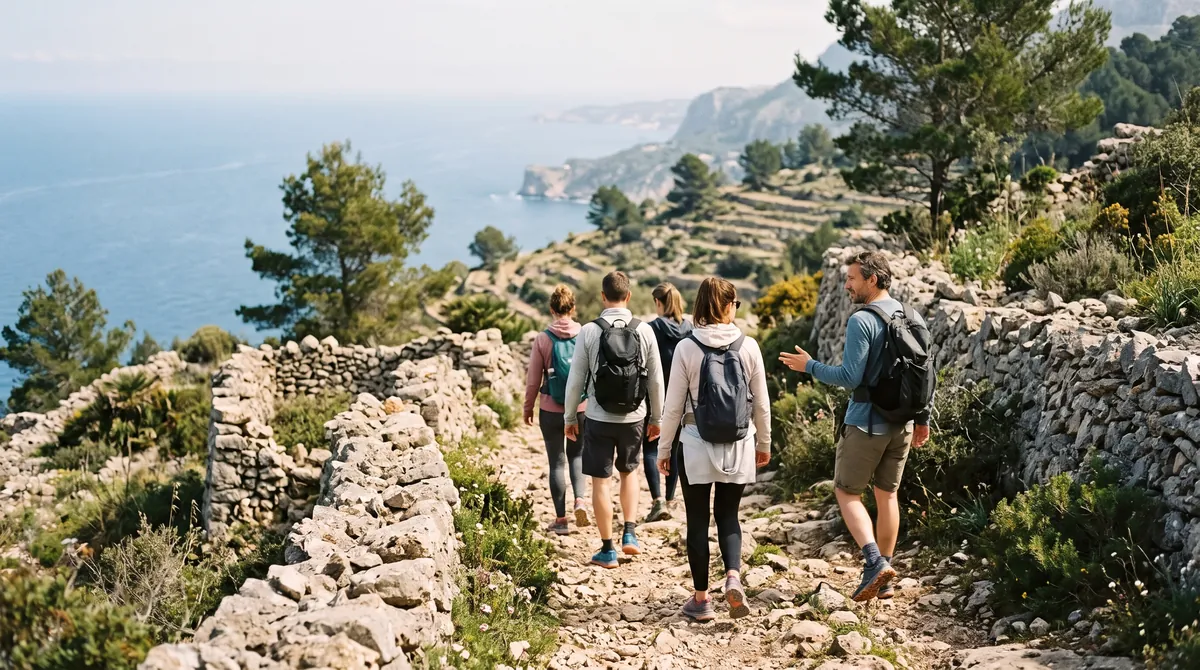
Singles holiday, group tour or meet-up programme: what the terms really mean



The word “singles holiday” always makes me smile, because everyone means something different by it: for some it is a week with a dance night, for others a quiet walking week with nice people. My advice: don’t read the label, read the programme. That is where it says what your holiday will really be like.
Gabianayour virtual travel companion · AI generated
Three terms, three kinds of holiday: what sets apart a trip open to solo travellers, a trip only for solo travellers and a trip with a meet-up programme, and what the law says.
The brochure says “singles holiday”, the next page says “group tour, solo travellers welcome”, and next to it an offer tempts you with a “meet-up programme”. If you want to travel alone and still have company, you will soon come across these terms, and it is often unclear what lies behind them. Will there only be singles? Is it about finding a partner? And what happens if too few people sign up? The answers have less to do with your marital status than with the kind of holiday: who comes along, what the evenings look like and how much time is left for you.
It is about the kind of holiday, not your marital status
The word singles holiday sounds like a relationship status, but in practice it usually means something else: a trip that people arrive at on their own and where they find company once they are there. Whether someone is married, widowed, separated or unattached makes no difference to the trip. Some travel alone because their partner cannot get time off, others because nobody in their circle of friends shares their interests, and others simply because they like it. What matters is how a trip is organised. Three types can be told apart.
Type one: a trip open to solo travellers
The first type is a perfectly ordinary group tour that is expressly open to solo travellers as well. The group is mixed: couples, friends travelling together, individuals, often of different ages. Single rooms can be booked, frequently at an extra charge. The focus is on the theme of the trip, such as walking, culture or cooking, not on getting to know people. Conversations come about during the programme, at shared meals or on the coach. This type suits you if above all you want to experience the destination and see company as a pleasant bonus. Sometimes couples tend to keep to themselves in the evening, and then the solo travellers often band together.
Type two: a trip expressly for solo travellers
With the second type, only individuals travel. Everyone in the group has come alone, so nobody feels like a spare wheel among a crowd of couples. Trips like these are often advertised by age group, so that stages of life and interests match. One advantage: some of these trips come without a single supplement, because the offer is designed for individuals from the outset. Whether that is the case is stated in the offer or can be asked about. Depending on the provider, such trips are called singles holidays, holidays for solo travellers or solo trips. What matters is not the name but the assurance that the group consists only of individuals.
Type three: a trip with a meet-up programme
The third type goes one step further. Here, getting to know each other is expressly part of the programme: shared dinners at long tables, games, excursions in changing groups. The tour leader makes sure that everyone mixes and nobody is left on the sidelines. That does not mean it is only about finding a partner. Many people who book trips like these are mainly looking for company, new acquaintances and a holiday where they don’t have to take care of meeting people themselves. If a friendship or more comes of it, that is lovely, but it is not a promise. This type suits you if you enjoy being among people and like a programme in the evening. If you need plenty of time to yourself, you will quickly feel over-scheduled here.
The answers have less to do with your marital status than with the kind of holiday.
The three types compared
| Type | Who it suits | Group | Rooms | Evenings |
|---|---|---|---|---|
| Open to solo travellers | Anyone who mainly wants to experience the destination and theme | A mix of couples, friends and individuals | Single rooms available, frequently at an extra charge | Depends on the programme, often free evenings too |
| Expressly for solo travellers | Individuals who would like to travel among other individuals | Individuals only, often by age group | Single rooms, sometimes without a supplement | Varies, the evening programme is set out in the description |
| With a meet-up programme | People looking for plenty of contact and a full programme | Individuals, deliberately mixed | Single rooms or room sharing, depending on the offer | Shared dinners, games and excursions |
The boundaries are fluid. The programme shows what a trip really is.
How to recognise the type in the offer
The description reveals more than the title. Look at whether it talks about a mixed group or expressly only about solo travellers, whether an age group is mentioned and how the evening programme is described. Phrases such as “shared dinners” or “time to get to know each other” point to plenty of contact, while “free evenings” and “time at your own disposal” point to more room for you. If something is missing, ask before you book:
- Age range: How old are the participants typically, and is there a fixed age group?
- Group size: What is the maximum number of people on the trip, and what is the minimum?
- Share of solo travellers: Do only individuals come along, or couples and groups of friends as well?
- Rooms: Are there single rooms, with or without a supplement, or will a shared room be arranged?
- Free days: How many days or half days have no programme?
- Evening programme: Do people eat together, are there fixed evening events or free evenings?
What the law says
A group tour with accommodation and a programme is usually a package holiday. That brings protection with it: in Germany, tour operators have to hand over a security certificate (Sicherungsschein) covering insolvency protection. Ask for this certificate and keep it with your travel documents.
Many group tours only go ahead if enough people sign up. If a minimum number of participants is not reached, the tour operator may only cancel within the deadline stated in the contract. Under § 651h BGB, this is no later than 20 days before departure for a trip lasting more than six days, seven days beforehand for trips of two to six days and 48 hours beforehand for trips shorter than two days. For you, this means that a flight which is not part of the package holiday is best booked only once this deadline has passed. Or you can ask the tour operator whether the minimum number has already been reached.
Which type suits you?
If you mainly want to experience a destination and are happy to have company but don’t need it, an open group tour is an easy way in. If you quickly feel like the exception among couples, a trip only for solo travellers is more relaxed. And if you would like company in the evening without having to take the first step yourself, a meet-up programme does exactly that work for you. No type is better than the others. What matters is that it suits your travel mood.
Frequently asked questions
Is a singles holiday a dating agency?
Usually not. Singles holidays are trips for people who arrive on their own and are looking for company. Trips with a meet-up programme also aim at contact and new acquaintances, not only at finding a partner.
Do I always have to pay a single supplement on a group tour?
Not always. On trips that are open to everyone, the single room often costs extra. Trips expressly for solo travellers sometimes do without the supplement, because they are designed for individuals.
What is a security certificate?
Proof of the insolvency protection for your package holiday, known in Germany as a Sicherungsschein. Tour operators in Germany have to hand it over. Keep it together with your travel documents.
How late can a group tour be cancelled for lack of participants?
Only within the deadline in the contract. Under § 651h BGB, no later than 20 days before departure for trips of more than six days, seven days for trips of two to six days and 48 hours for trips of less than two days.
More in our network
- trevisitShort trips and city breaks
Short trips and city breaks, also as inspiration for a first trip in a group.
- suruyaWellness and retreats
Wellness and retreats, with time-out weeks that are easy to book on your own.
Our articles are carefully researched, general information. Timetables, opening hours, prices and rules change, so check them with the local providers before you travel. Gabiana is a virtual host: she gives advice and her view of things, but she does not tell stories of her own travels.